General
Living Donation and Marginalized Communities

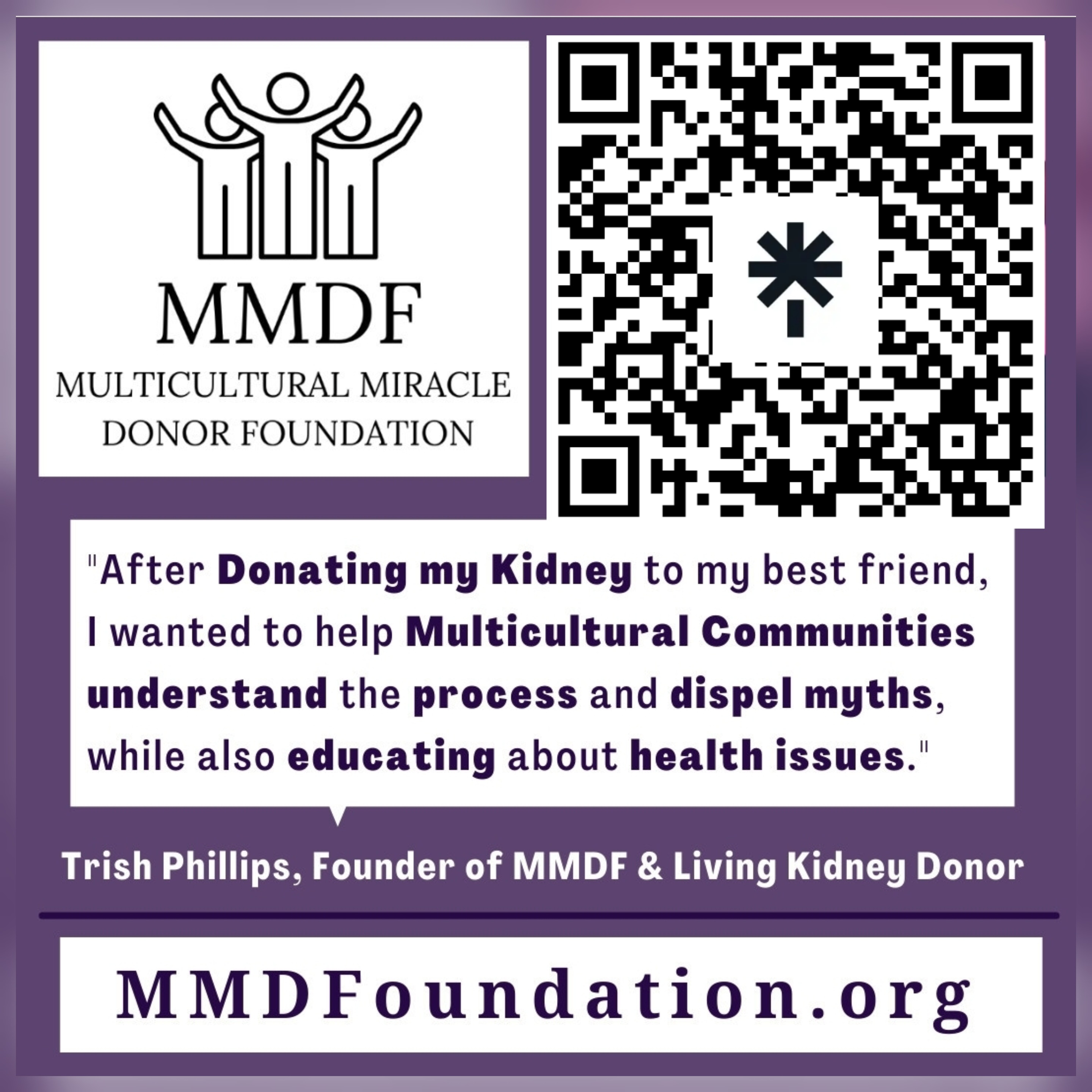
If you were in support group tonight, we had the best conversation with Trish from the Multicultural Miracle Donation Foundation on common myths surrounding living donation, and how to approach the transplant/donation conversation with those who might have medical distrust or marginalized people in our communities. These conversations are always so powerful, and so needed.
I'm linking Trish's info so you can connect with her if you're interested in finding out more about her foundation and the incredible work they do. and I'd love to continue the conversation.
As a white person, I know I've learned so much from the people of colour in my communities, and their insight has given me so much food for thought I never would have been aware of if I'd only paid attention to my experience. Change isn't good enough unless it's for all of us, and learning from people like Trish really inspires me that we can change organ donation and transplant care for all of us.


1 - 2 of 2 Replies
This was a great group tonight. Really brought out some good resources and helped bust some myths as well. Thank you Trish for speaking tonight!
Transplant Patient
Agreed, @AliEm14 & @Berriosa1234 . Indeed, Trish was an awesome guest, and the convo was engaging all around. She touched on all of the points below:
Approximately 60% of the national transplant waiting list comprises minority populations, with Black/African Americans making up the largest group in need (roughly 27–31% of candidates). While White patients make up about 35-45% of the list, Black and Hispanic patients face significantly higher rates of kidney failure, contributing to the high demand within their communities.
*Kidney Transplant Waiting List Statistics by Race/Ethnicity (Approximate)*
White: 35% - 45%
Black/African American: 27% - 31%
Hispanic/Latino:17% - 23%
Asian:6% - 8%
Other/Multi-racial: < 2%
*Key Disparities and Trends in Kidney Transplantation*
*Higher Risk:*
Black Americans are nearly four times more likely, and Hispanics are more than twice as likely, to develop end-stage kidney disease compared to white counterparts.
*Policy Adjustments:*
As of January 2023, policy changes were implemented to modify waiting times for Black candidates previously disadvantaged by race-based kidney function calculations(eGFR). Over 14,000 Black kidney transplant candidates have since been moved up on the waiting list due to the correction/policy change.
*Donation Disparity:* While they make up a large portion of the list, Black Americans represent only about 13% of organ donors.
*Waitlist Representation:*
Black patients are disproportionately represented on the waiting list compared to their population size.
*Living Donor Disparity:*
While 71.4% of living donors are White, only 8% are Black, despite Black Americans being the largest group in need.
*Wait Time Factors:*
Black patients frequently face longer wait times for transplants.
*Waitlist Representation*
Minority populations often experience higher rates of diabetes and hypertension, resulting in higher waitlist numbers.
Data shows that while 62% of people on the national transplant waiting list represent minority populations, only 29% of donors are from these communities.
If other's on this forum have questions related to Transplantation & Organ, Eye, and Tissue donation in multi-cultural / minority communities, I may be able to answer too.